
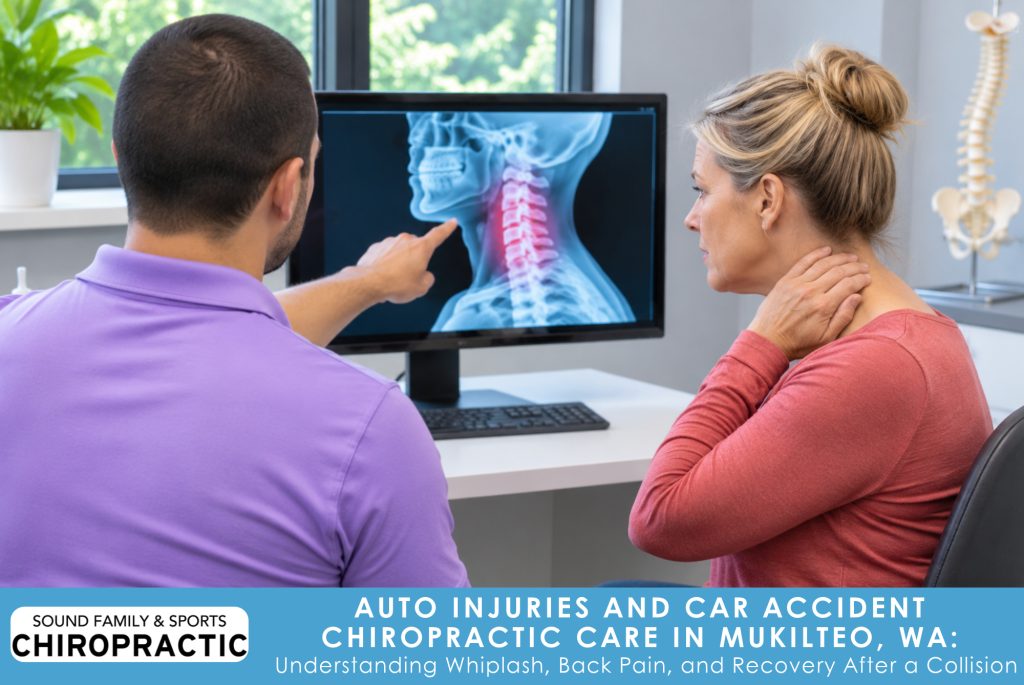
Car accidents can cause injuries that affect the neck, back, shoulders, muscles, joints, and nervous system. Even a relatively minor collision can produce significant physical stress, leading to pain, stiffness, headaches, and reduced mobility. While some symptoms develop immediately, others become noticeable hours or days after an accident.
At Sound Family & Sports Chiropractic in Mukilteo, WA, understanding the effects of auto injuries is an important first step toward addressing musculoskeletal discomfort and restoring everyday function. Chiropractic care can play a role in conservative recovery for appropriately evaluated patients experiencing neck pain, back pain, and movement restrictions following a car accident.
Whether you have experienced a rear-end collision, side-impact accident, or another type of motor vehicle crash, recognizing potential injuries and obtaining timely medical evaluation can help prevent overlooked complications.
What Are the Most Common Auto Injuries After a Car Accident?
Auto injuries occur when sudden acceleration, deceleration, impact, or twisting forces place stress on the body’s muscles, ligaments, tendons, joints, and other structures. The severity of an injury depends on multiple factors, including the direction of impact, occupant position, seat belt use, and individual health.
Whiplash and Neck Injuries
Whiplash is one of the most frequently discussed injuries associated with motor vehicle collisions, particularly rear-end accidents. It occurs when rapid movement of the head and neck places excessive strain on cervical structures.
Common whiplash symptoms include:
- Neck pain and stiffness
- Reduced ability to turn the head
- Headaches, especially near the base of the skull
- Shoulder and upper back discomfort
- Muscle tenderness or spasms
- Dizziness or difficulty concentrating
Whiplash-associated disorders can range from mild soft tissue injuries to more complex conditions involving neurological symptoms.
According to the National Institute of Neurological Disorders and Stroke, traumatic injuries affecting the nervous system require careful assessment, particularly when symptoms suggest possible brain or nerve involvement.
Lower Back Pain and Lumbar Strain
The lumbar spine absorbs considerable mechanical stress during a car accident. Sudden impact can strain supporting muscles and ligaments, irritate spinal joints, or aggravate preexisting back conditions.
Patients experiencing lower back injuries may notice pain when sitting, standing, bending, lifting, or transitioning between positions.
Persistent pain, especially when accompanied by symptoms extending into the legs, warrants evaluation to determine whether nerve involvement or another spinal condition is present.
Shoulder and Upper Back Injuries
Seat belt restraint, bracing against the steering wheel, and sudden twisting can contribute to shoulder and upper back discomfort.
Possible injuries include muscle strains, joint irritation, and soft tissue inflammation. Some patients experience discomfort between the shoulder blades or difficulty raising their arms.
Headaches Following a Collision
Headaches after a car accident can result from cervical muscle tension, joint irritation, or other injuries. However, headaches can also indicate concussion or more serious head trauma.
A new, severe, persistent, or worsening headache after a collision requires medical assessment, particularly when accompanied by dizziness, vomiting, confusion, visual disturbances, or neurological changes.
Disc Injuries and Nerve Irritation
Motor vehicle collisions can aggravate existing disc abnormalities or contribute to spinal injuries.
Symptoms that suggest possible nerve involvement include radiating pain, tingling, numbness, weakness, or altered sensation in the arms or legs.
These symptoms require an appropriate medical and neurological evaluation before manual treatment is considered.
Why Do Car Accident Symptoms Sometimes Appear Days Later?
Not every auto injury produces immediate pain. Following a collision, the body’s stress response can temporarily influence how discomfort is perceived.
As the initial stress response subsides and injured tissues become more symptomatic, patients may begin noticing stiffness, soreness, headaches, or difficulty performing everyday movements.
Delayed symptoms can occur with muscle strains, ligament injuries, and whiplash-associated disorders.
However, delayed pain should not automatically be assumed to represent a minor soft tissue injury. Certain serious conditions can also become apparent after the initial accident.
Anyone who develops new or worsening symptoms after a car accident should seek appropriate medical evaluation.
How Can Chiropractic Care Help After a Car Accident?
Chiropractic care focuses on evaluating and managing musculoskeletal conditions affecting the spine, joints, muscles, and movement patterns.
For patients with uncomplicated mechanical neck or back pain following a car accident, conservative chiropractic treatment can be one component of a broader recovery plan.
Comprehensive Musculoskeletal Assessment
An appropriate evaluation begins with reviewing the circumstances of the accident, the patient’s symptoms, medical history, and functional limitations.
A chiropractic assessment may include:
- Review of the collision and symptom onset
- Evaluation of posture and movement
- Examination of spinal and joint mobility
- Muscle tenderness and functional testing
- Neurological screening when indicated
- Identification of symptoms requiring medical referral
Not every patient is an appropriate candidate for spinal manipulation. Suspected fractures, instability, significant neurological deficits, vascular injury, or other serious conditions require medical assessment before chiropractic treatment.
Chiropractic Adjustments and Joint Mobility
For appropriately selected patients, spinal manipulation or mobilization may help address mechanical joint restrictions and certain forms of musculoskeletal pain.
Treatment selection depends on the patient’s examination findings, tolerance, and clinical presentation.
High-velocity cervical manipulation should not be performed when serious trauma-related injury or relevant contraindications have not been excluded.
Soft Tissue and Muscle Care
Muscle tension and soft tissue irritation frequently contribute to discomfort after auto injuries.
Conservative management may include manual soft tissue techniques, gentle mobility exercises, and strategies to reduce unnecessary strain during recovery.
These approaches aim to improve comfort and support gradual restoration of normal movement.
Rehabilitation and Corrective Exercises
Recovery from a car accident often requires more than temporary symptom relief.
Individualized therapeutic exercises can help patients improve mobility, rebuild muscular endurance, restore functional movement, and gradually return to their usual activities.
The specific exercises and progression should reflect injury severity, symptoms, and clinical findings.
Education and Activity Modification
Patients benefit from understanding how to manage discomfort without unnecessarily restricting movement.
When medically appropriate, gradual activity, ergonomic adjustments, and progressive exercise can support recovery. Prolonged immobilization is generally discouraged for uncomplicated whiplash-associated disorders unless a specific injury requires it.
Whiplash Treatment After a Car Accident in Mukilteo, WA
Whiplash is not a single injury with one universal treatment. It describes a mechanism of injury and a collection of possible symptoms involving the cervical spine.
Treatment should be guided by the severity of symptoms, physical examination findings, neurological status, and the presence of other injuries.
Why Early Assessment Matters
Early evaluation helps distinguish uncomplicated neck strain from injuries that require imaging, specialist care, or emergency treatment.
Clinical decision rules, such as the Canadian C-Spine Rule, can help qualified healthcare professionals determine when cervical spine imaging is indicated after certain types of trauma.
Not every patient needs an X-ray or MRI, and imaging should be based on clinical findings rather than ordered routinely.
Supporting Neck Mobility and Function
Once serious injuries have been excluded, conservative care may focus on gradually improving neck movement, reducing pain-related muscle guarding, and restoring daily activities.
A combination of patient education, appropriate exercise, and selected manual therapies can be considered depending on the individual.
Preventing Persistent Functional Limitations
Some patients recover within weeks, while others experience symptoms lasting several months or longer.
Persistent pain can be influenced by initial injury severity, sleep disruption, psychological stress, preexisting conditions, and other factors.
Ongoing symptoms deserve reassessment rather than simply repeating treatment without evaluating progress.
Can a Minor Car Accident Cause Significant Neck or Back Pain?
Yes. A collision does not have to involve extensive vehicle damage to cause musculoskeletal symptoms.
Vehicle repair costs and visible damage do not reliably establish whether an occupant has been injured or how severe an injury might be.
Individual factors, collision mechanics, head position, and preexisting health conditions influence the body’s response.
Even after a low-speed collision, patients should pay attention to new pain, stiffness, headaches, and neurological symptoms.
The appropriate response is based on symptoms and examination findings, not the appearance of the vehicle alone.
When Should You Seek Emergency Medical Care After an Auto Injury?
Some car accident injuries require immediate emergency medical attention rather than chiropractic treatment.
Call 911 or seek emergency care for:
- Loss of consciousness or significant confusion
- Severe or worsening headache
- Repeated vomiting after a head injury
- New weakness, numbness, or difficulty walking
- Severe neck or back pain with neurological symptoms
- Loss of bladder or bowel control
- Chest pain, difficulty breathing, or severe abdominal pain
- Significant bleeding, suspected fracture, or spinal instability
- New speech difficulties, facial drooping, or sudden visual changes
Patients with possible concussion, traumatic brain injury, spinal fracture, or other serious trauma should receive medical clearance before beginning chiropractic treatment.
The Centers for Disease Control and Prevention (CDC) provides educational resources on concussion symptoms, warning signs, and recovery.
How Long Does It Take to Recover From Car Accident Injuries?
Recovery depends on the type of injury, severity of symptoms, preexisting health conditions, and response to treatment.
Mild Muscle Strains and Soft Tissue Injuries
Uncomplicated strains often improve over several days to weeks, although the exact timeline varies.
Whiplash-Associated Disorders
Many individuals improve substantially within the first several weeks to months. Some experience persistent symptoms requiring additional assessment and rehabilitation.
More Complex Spinal or Neurological Injuries
Disc injuries, fractures, nerve injuries, and other complicated conditions can require longer recovery periods, specialist evaluation, or additional medical treatment.
The goal of recovery is not simply to eliminate pain temporarily. It is to restore meaningful function, improve activity tolerance, and identify any complications that require further care.
What Should You Do Immediately After a Car Accident?
Taking appropriate action after a collision can protect your health and help establish a clear medical history.
- Check for immediate danger. Contact emergency services when injuries, unsafe road conditions, or other hazards require assistance.
- Seek appropriate medical evaluation. Serious symptoms require emergency care. Other new symptoms should be assessed promptly.
- Monitor delayed symptoms. Watch for neck pain, back pain, headaches, dizziness, tingling, and changes in mobility.
- Document your symptoms. Record when symptoms began, how they change, and which activities are affected.
- Follow medical recommendations. Complete necessary diagnostic testing, referrals, and treatment.
- Avoid forcing painful movements. Resume activities gradually as directed by your healthcare professional.
- Consider conservative musculoskeletal care. After serious injuries have been excluded, chiropractic care may be appropriate for selected neck and back complaints.
Why Choose Sound Family & Sports Chiropractic for Auto Injury Care in Mukilteo, WA?
Recovering from a car accident requires an individualized approach that considers the patient’s symptoms, functional limitations, and overall health.
Sound Family & Sports Chiropractic provides a local point of contact for individuals in Mukilteo seeking evaluation of musculoskeletal concerns following motor vehicle collisions.
Patients experiencing whiplash-related neck discomfort, back pain, stiffness, or restricted movement can contact the practice to discuss whether chiropractic evaluation is appropriate.
The practice’s Mukilteo location is convenient for individuals living or working in surrounding communities, including Everett, Lynnwood, Edmonds, and nearby areas of Snohomish County.
To learn more about the practice and available care, visit the Sound Family & Sports Chiropractic website.
Frequently Asked Questions About Auto Injuries and Car Accident Chiropractic Care
Should I See a Chiropractor After a Car Accident Even if I Feel Fine?
Not everyone needs chiropractic treatment after a car accident. If you have no symptoms, chiropractic care is not automatically necessary. However, a medical evaluation may still be appropriate depending on the collision, head impact, medical history, and other risk factors. If neck pain, back pain, headaches, or stiffness develop later, seek an assessment.
How Soon After a Car Accident Should I See a Chiropractor?
The appropriate timing depends on the nature of the collision and your symptoms. Emergency conditions and suspected serious injuries must be evaluated medically first. Once serious injuries have been excluded, patients with musculoskeletal symptoms can discuss conservative care options with a qualified healthcare professional.
Can Chiropractic Care Help With Whiplash?
Chiropractic care may help selected patients with mechanical neck pain and restricted movement associated with uncomplicated whiplash. Treatment can include education, exercises, and appropriate manual techniques. Evidence does not establish that spinal manipulation is necessary for every whiplash injury.
Can a Rear-End Collision Cause Lower Back Pain?
Yes. A rear-end collision can produce forces that strain the muscles, ligaments, and joints supporting the lower back. Symptoms may appear immediately or develop later. Persistent pain, radiating symptoms, or neurological changes require further evaluation.
Do I Need an X-Ray After a Car Accident?
Not necessarily. Imaging decisions depend on the mechanism of injury, symptoms, examination findings, and validated clinical decision rules. X-rays are useful for certain suspected bone injuries, while CT or MRI may be indicated in specific circumstances. Routine imaging is not recommended for every uncomplicated muscle strain.
Can Chiropractic Care Help With Headaches After a Car Accident?
Some headaches are associated with neck muscle tension or cervical musculoskeletal dysfunction. Conservative treatment may help selected patients once serious causes have been excluded. New, severe, or worsening headaches after a collision require medical evaluation to assess for concussion, bleeding, or other injuries.
What if My Neck Pain Starts Two or Three Days After the Accident?
Delayed neck discomfort can occur following whiplash or other soft tissue injuries. However, new symptoms should not be dismissed simply because they began after the accident. Arrange a clinical evaluation, particularly if pain is worsening or accompanied by dizziness, weakness, or numbness.
How Many Chiropractic Visits Will I Need After an Auto Injury?
There is no universal number of visits. Treatment frequency and duration depend on examination findings, symptom severity, functional goals, and measurable progress. An appropriate care plan should be reassessed regularly and adjusted when improvement is limited.
Is Chiropractic Treatment Safe After a Car Accident?
Safety depends on the injury, treatment method, and patient’s medical history. Chiropractic treatment is not appropriate for every post-accident condition. Serious trauma, fractures, spinal instability, and certain neurological or vascular conditions must be excluded before spinal manipulation is considered. Treatment also carries risks that should be discussed during informed consent.
Can Car Accident Injuries Cause Numbness or Tingling?
Yes. Numbness and tingling can occur when nerves are irritated or injured. However, these symptoms can also indicate significant neurological problems. New or progressive weakness, widespread numbness, or changes in bowel or bladder control require urgent medical evaluation.
Will Auto Insurance Cover Chiropractic Treatment After a Car Accident in Washington?
Coverage depends on the insurance policy, available benefits, claim circumstances, and applicable Washington insurance requirements. Personal Injury Protection (PIP) coverage, when available, can provide benefits for qualifying accident-related medical expenses. Patients should confirm their coverage and the practice’s billing policies directly before beginning treatment.
Can I Continue Exercising While Recovering From Whiplash?
Many patients with uncomplicated whiplash benefit from gradually returning to normal activities and performing appropriate exercises. However, the timing and intensity of exercise should be guided by the injury and clinical findings. Contact sports, heavy lifting, and strenuous activity may need to be postponed until medically appropriate.
When Should I See a Doctor for Persistent Pain After a Car Accident?
Seek medical reassessment when pain worsens, does not improve as expected, disrupts sleep or daily activities, or is accompanied by neurological symptoms. Persistent symptoms can indicate an injury requiring additional testing, rehabilitation, or specialist care.
Supporting a Safe Recovery After Auto Injuries in Mukilteo, WA
Car accidents can cause a wide range of injuries, from uncomplicated muscle strains to more serious spinal and neurological conditions. Recognizing symptoms early, obtaining appropriate medical evaluation, and following an individualized recovery plan are important steps toward restoring mobility and function.
For patients experiencing mechanical neck pain, back discomfort, or movement limitations after a collision, chiropractic care can be considered as part of a conservative treatment approach when clinically appropriate.
Sound Family & Sports Chiropractic in Mukilteo, WA welcomes inquiries from individuals seeking information about chiropractic care following auto injuries and car accidents.
Request an Appointment With Sound Family & Sports Chiropractic
Medical and Academic References
The following independent, non-competitor resources provide additional information about motor vehicle injuries, whiplash, concussion, and evidence-based management of musculoskeletal conditions.
- Mayo Clinic – Whiplash: Symptoms and Causes. Overview of whiplash symptoms, injury mechanisms, and potential complications.
- CDC – HEADS UP: Concussion and Brain Injury Resources. Guidance on concussion recognition, warning signs, and recovery.
- National Institute of Neurological Disorders and Stroke. Federal resources concerning neurological injuries and disorders.
- American College of Radiology – Appropriateness Criteria. Evidence-based recommendations for selecting diagnostic imaging in clinical scenarios, including trauma.
- National Institute for Health and Care Excellence – Spinal Injury: Assessment and Initial Management. Clinical recommendations concerning initial evaluation and management of suspected spinal injury.
- PubMed – Research on Whiplash-Associated Disorders. Peer-reviewed research and clinical guidelines related to whiplash evaluation and treatment.
Contact Information
Sound Family & Sports Chiropractic
8227 44th Ave W, STE C
Mukilteo, WA 98275
Phone: (425) 267-0787
Website: soundfschiro.com
Request an Appointment: Schedule Online